A policy priority is not yet a project specification
On January 7, 2026, Housing, Infrastructure and Communities Canada reported thousands of homes in the Build Canada Homes pipeline. The announcement included requests for qualification for six Direct Build sites and described up to 4,000 units on federal lands, with modular and factory-built methods prioritized.
That is a significant public signal. It places modern construction methods inside a large housing-delivery program rather than treating them as isolated demonstrations. It also creates a risk of reading more into the announcement than it says.
“Prioritize factory-built” identifies a delivery direction. It does not specify one building system, name approved suppliers, guarantee that every unit will be modular, or resolve the design and delivery requirements for six different sites.
The next useful question is therefore not who will win. It is what procurement must define so that repetition produces reliable housing rather than repeated ambiguity.
What the January announcement confirmed
The federal release described six Direct Build locations in Toronto, Winnipeg, Edmonton, Longueuil, Ottawa, and Dartmouth. It stated that requests for qualification had been issued and that the sites would prioritize innovation and modern methods of construction.
The release also described partnerships and a broader pipeline extending beyond those six sites. These are program facts, not evidence that a particular supplier, imported product, construction system, or proposed design has been selected.
For buyers and suppliers outside the procurement, the article's value is not speculation. It is the opportunity to understand which information a serious factory-built package must eventually make clear.
Standardization has to coexist with local conditions
Factory-built delivery gains value when designs, components, processes, and evidence can be repeated. Public housing sites, however, are not identical.
Climate, soils, foundation conditions, utility capacity, street access, transport distance, labor, local code administration, accessibility, fire requirements, community needs, and building form can vary. If every site forces a complete redesign, the benefits of repetition shrink. If standardization ignores local conditions, the project accumulates site changes, approval delays, and field modifications.
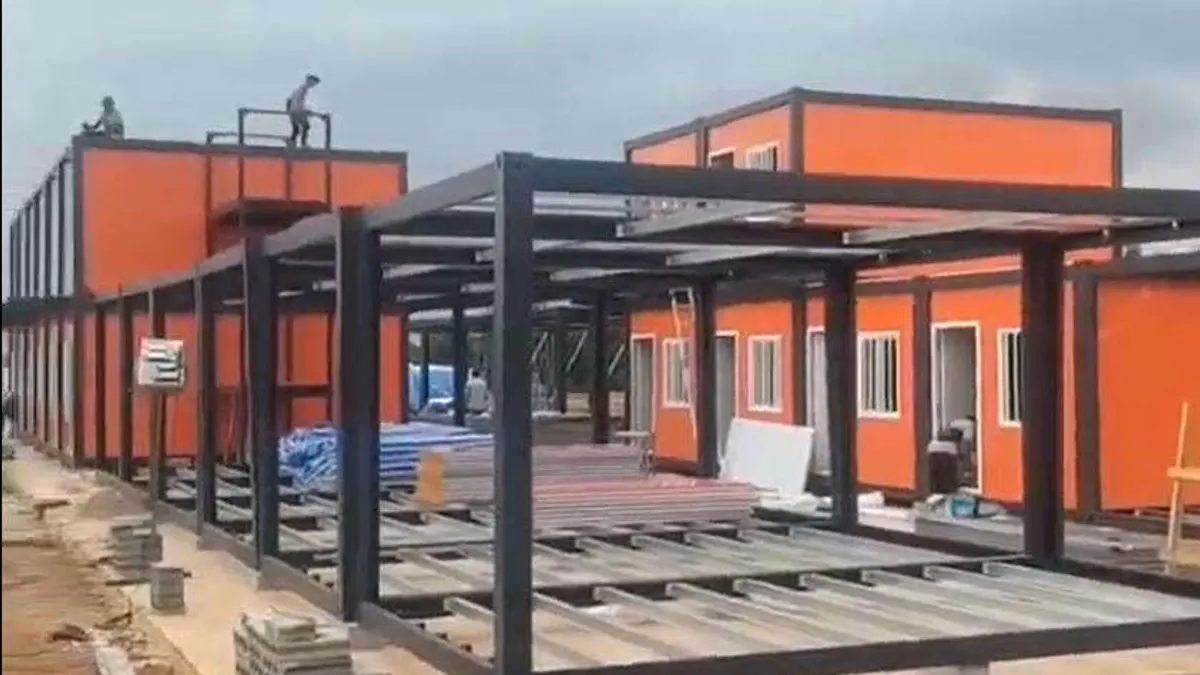
Procurement should identify which parts are fixed, configurable, and site-specific. A repeatable structural grid might coexist with different foundations. A standard room or service core might support several building arrangements. Exterior and community-facing elements may respond to place while factory processes remain controlled.
The specification should make those layers explicit.
Product evidence needs a clear owner and revision
A factory-built package may include design calculations, drawings, material specifications, fire and acoustic information, energy data, factory quality records, inspection reports, transport details, connection designs, installation instructions, and commissioning requirements.
The procurement question is not simply whether these documents exist. It is which party owns them, which revision applies to the delivered unit, which authority reviews them, and how changes are controlled across multiple buildings and sites.
Repeatability magnifies both good and bad change management. A clear correction can improve many units. An uncontrolled substitution or outdated drawing can propagate across the same production run.
Public procurement therefore needs a common information environment and a disciplined approval trail that follows the building from design through factory and site completion.
Factory capacity must connect to site sequencing
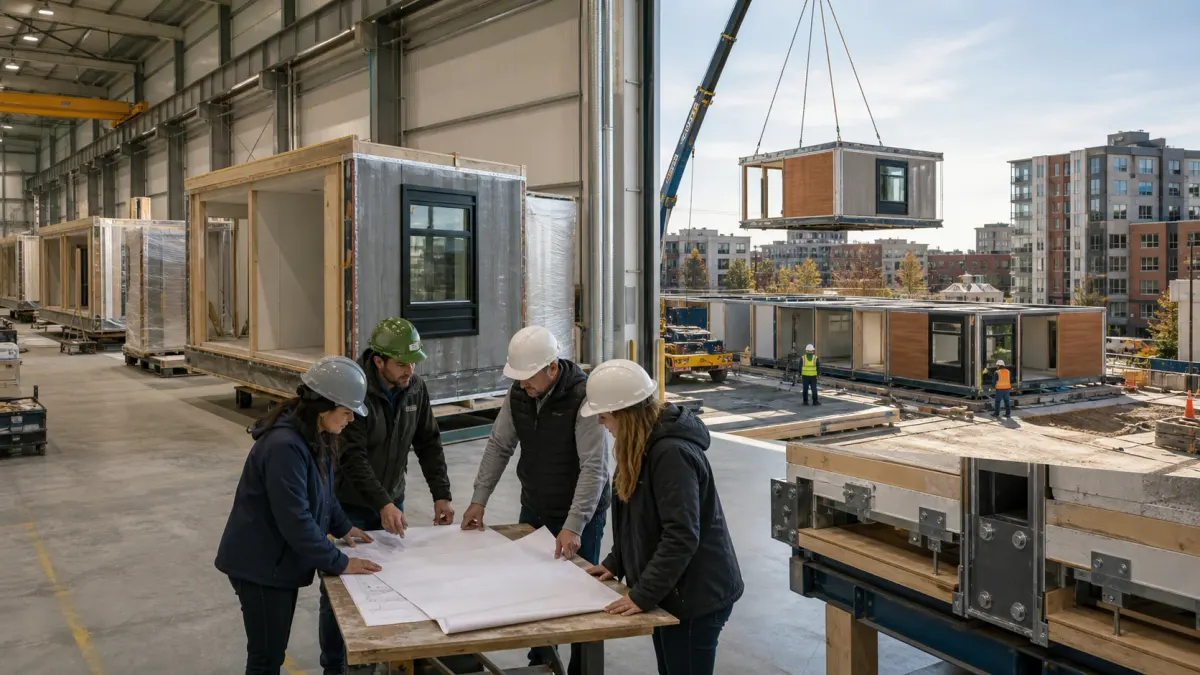
A factory can only support a program when its production sequence matches design release, site readiness, transport, storage, installation, and inspection capacity.
Nominal annual capacity is less useful than a project-specific plan. How many units can be released after design freeze? Which long-lead materials matter? How are several sites sequenced? What happens if one site is delayed? Can completed modules be stored safely? Are transport and installation crews available at the same pace as production?
These questions prevent a common failure: optimizing the factory while creating a queue at the site. The program schedule should identify the constraint across the complete chain, not assume that more factory output always means faster occupancy.
Transport and installation need named responsibilities
Factory-built procurement crosses organizational boundaries. The module manufacturer may not own the land, foundation, transport permit, crane, temporary works, utility connections, weather protection, local inspection, commissioning, or long-term facilities management.
Every interface should identify a responsible party, required input, acceptance evidence, and timing. That includes dimensional tolerances between foundation and module, protection during transport, arrival inspection, lifting points, connection details, water and air tightness at site joints, MEP testing, defect handling, and handover documentation.
These are not secondary logistics details. They decide whether a factory product becomes a completed building.
Local participation is part of the delivery model
Large factory-built programs can involve central manufacturing and local work at the same time. Site preparation, foundations, utilities, installation support, inspections, commissioning, maintenance, and resident services create local responsibilities even when major building elements arrive from elsewhere.
Procurement should define the expected local role rather than using vague language about partnership. Which licenses or qualifications are required? Who trains local teams? Who responds after handover? Where are replacement components held? Which party owns warranty coordination and resident-facing defects?
A system becomes scalable when the repeatable factory package and the local delivery package are designed together.
A supplier-neutral readiness checklist
Before a factory-built proposal can be compared fairly, a project team should be able to find clear answers for:
- intended building use and design basis;
- fixed, configurable, and site-specific scope;
- code and approval pathway;
- design and evidence ownership;
- factory quality and inspection process;
- production capacity tied to project sequence;
- transport, storage, and installation responsibilities;
- foundation and utility interfaces;
- commissioning and handover;
- maintenance, parts, warranty coordination, and local support;
- exclusions, assumptions, and change control.
Build Canada Homes has made factory-built methods part of a national housing conversation. The credibility of that direction will be established project by project, through procurement that defines the interfaces as carefully as it describes the units.
Sources
Build Canada Homes: Thousands of Homes in the Pipeline, January 7, 2026