The standards question begins at the handoff
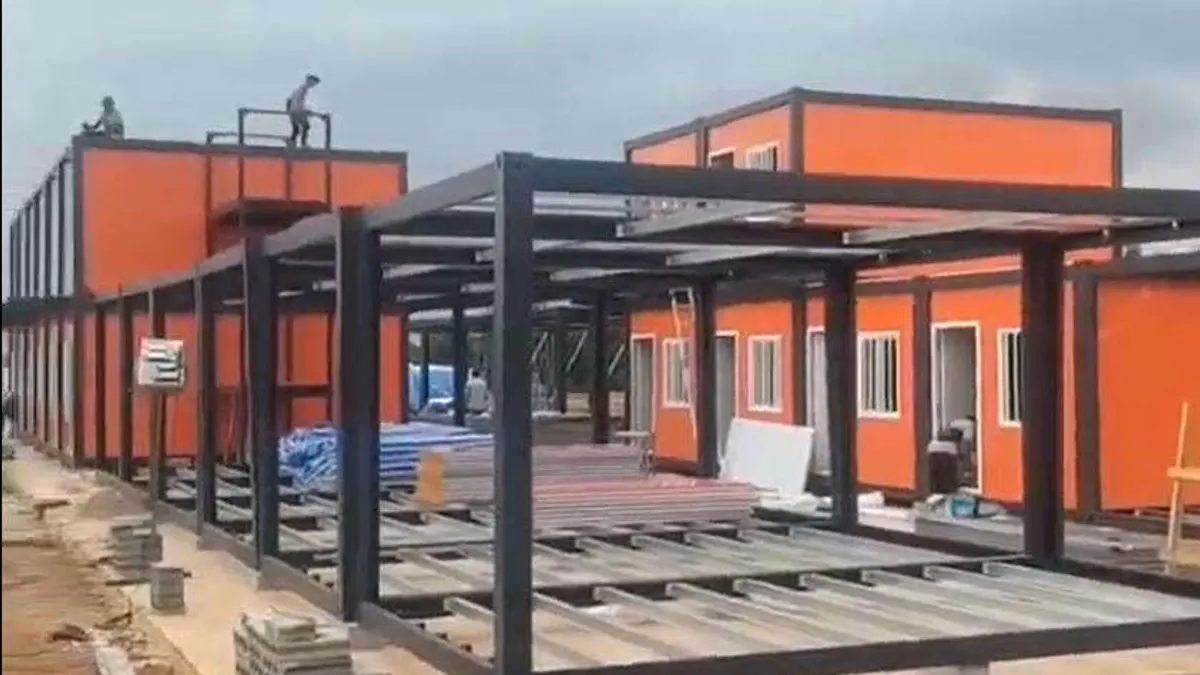
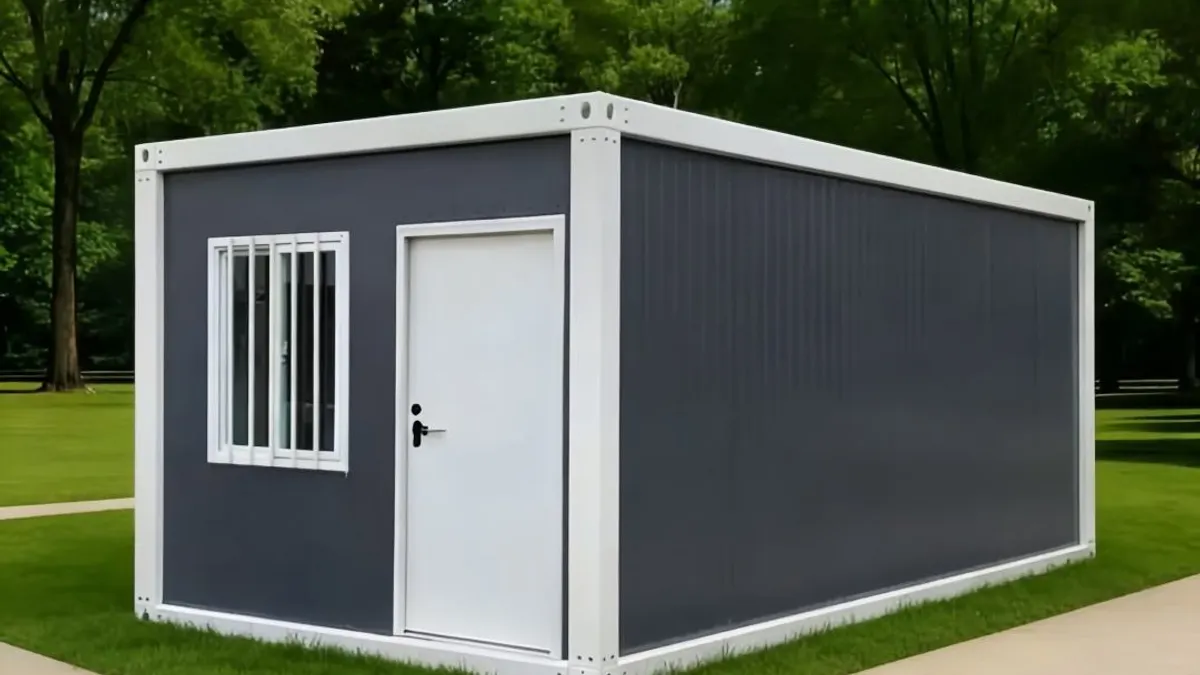
Off-site construction divides building work across places and organizations. Design may be coordinated in one office. Components or modules are produced in a factory. Transport places new demands on the structure. Foundations and connections are completed at the site. Several inspection bodies may see different parts of the work, while the local Authority Having Jurisdiction remains responsible for the final building context.
On August 21, 2026, the International Code Council announced a 45-day ANSI public-review period connected to development of second editions of ICC 1200, ICC 1205, and ICC 1210. The review is scheduled to open September 4 and close October 19, 2026. The committee is then scheduled to begin considering comments at a November 5 meeting.
The dates make this a current standards-development story. The substance makes it a project- coordination story.
The short version
ICC 1200, 1205, and 1210 address different parts of off-site construction, including planning, design, fabrication, transport, assembly, inspection, regulatory compliance, MEP systems, energy efficiency, and water conservation. Public review invites comments in the standards-development process. It does not itself make a proposed revision an adopted local code, and the ICC committee page states that these standards do not apply to HUD manufactured housing.
For project teams, the central lesson is that evidence created in the factory must remain usable when the building reaches the site.
Why three standards sit in one conversation
Off-site delivery is not one task. It includes management and planning, inspection and regulatory questions, and technical systems that cross module boundaries.
The ICC committee description brings together planning, design, fabrication, transport, assembly, permitting, in-plant and final-site inspection, third-party inspection, state modular programs, local authorities, energy, water, and modularized MEP elements.
That breadth is important. A module can be structurally complete while an MEP connection remains open. Factory quality records can be thorough while the site foundation falls under a different review. Energy performance can depend on joints and field-installed components that are not complete at factory inspection.
The standards conversation therefore has to cross organizational boundaries rather than assigning all compliance to the factory or all approval to the site.
Factory inspection and final inspection are not interchangeable
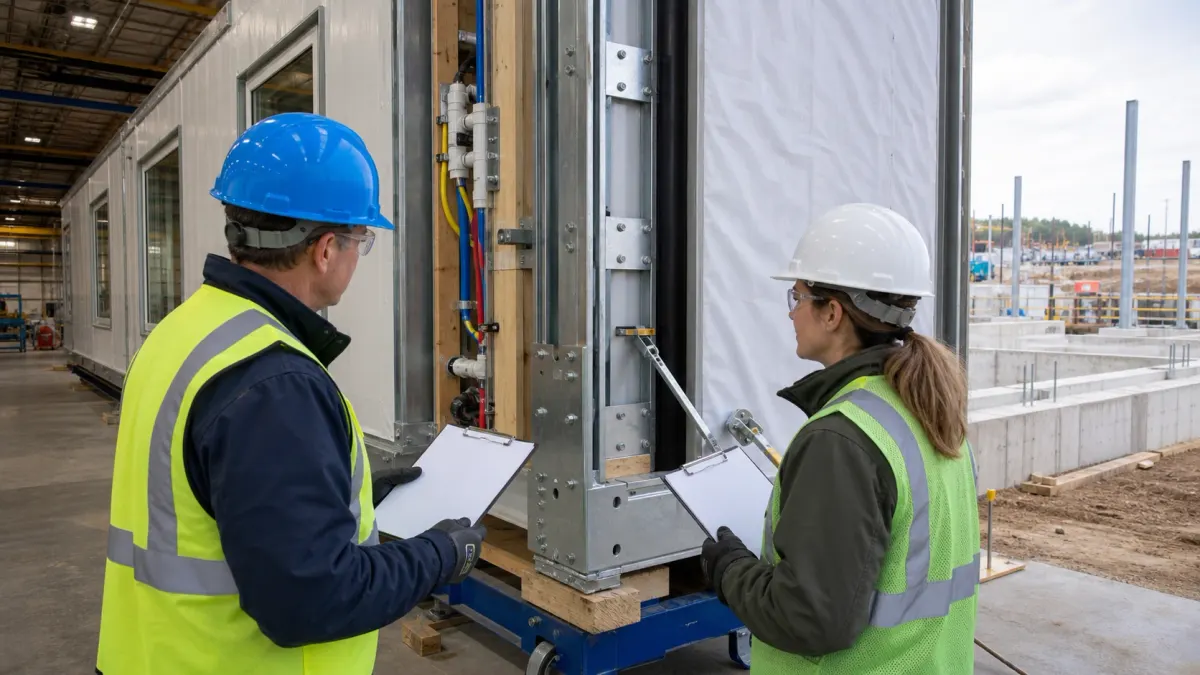
Factory inspection can observe work that later becomes concealed. It can verify materials, processes, dimensions, assembly details, and quality records under controlled production conditions. Final-site inspection can observe placement, foundation connections, module joints, field work, utility connections, access, and the relationship to the completed building and property.
One does not automatically replace the other. The project needs an inspection matrix that shows what is inspected, where, by whom, against which document, and how the evidence reaches the next reviewer.
This matrix should also identify hold points. Which work cannot proceed before approval? Which concealed condition needs a record? Which site change returns to the designer? Which factory deviation affects a local submission?
Without that chain, each inspection can be valid in isolation while the completed project still has an evidence gap.
Transport belongs inside the technical story
Transport is sometimes treated as a logistics event after the building is complete. For off-site construction, it can be a design condition.
Modules and components may experience lifting, support, vibration, acceleration, weather, temporary bracing, and dimensional constraints that differ from their final installed state. The design and production records should identify transport assumptions, lifting points, protection, permitted support locations, and arrival inspection requirements.
Damage or deviation at arrival also needs a controlled response. The transporter should not make an undocumented repair. The site should not conceal a condition before the responsible designer or inspector has determined the necessary action.
Transport evidence is part of the handoff because the factory record and the site record describe the same building at different stages.
MEP, energy, and water performance cross the module joint
Mechanical, electrical, and plumbing systems can be substantially completed off site, but their final performance may depend on field connections, controls, testing, balancing, insulation continuity, penetrations, and commissioning.
Energy and water outcomes also depend on the complete system. A tested component cannot by itself prove the performance of field-installed joints or site-connected equipment. Project documents should identify what is factory tested, what is site tested, what is commissioned, and who records the result.
This is one reason ICC 1210 belongs in the wider off-site discussion. The physical module boundary should not become an information boundary.
Public review is not local adoption
Standards development and code enforcement are related but different processes. A public- review draft invites scrutiny and proposed changes. A published standard may later be referenced or adopted by a jurisdiction, program, contract, or project. The applicable requirements still depend on the edition and legal or contractual context.
Articles should therefore avoid phrases such as “the new rule now requires” unless an identified authority has actually adopted that requirement. The correct current statement is that ICC is developing second editions and has announced a public-review window.
Project teams should confirm which edition is referenced in their jurisdiction and contract. They should also distinguish ICC off-site standards from HUD manufactured-housing rules, which the committee page explicitly places outside this standards scope.
What happens after October 19
ICC says the committee will begin considering comments at a meeting scheduled for November 5, 2026. Standards development can include review, committee action, revision, further process, and publication. The existence of a review window does not predict the final text.
For off-site buyers and project teams, the public process is worth following even if they do not submit a comment. It shows where the industry is working to clarify responsibility: the factory, third-party inspection, state program, local authority, MEP systems, transport, and site completion.
The most useful project response is immediate and practical. Build a handoff map now. A clear design, inspection, transport, installation, and commissioning trail is valuable regardless of when a particular jurisdiction adopts a particular edition.