Sanitation fails first at peak time
A sanitation plan may look adequate at average use and fail during shift change, prayer breaks, event intermissions, meal times, or bus departures. Capacity should therefore be planned around peaks, not averages.
The question is not only how many units exist. It is who uses them, when, for how long, and what happens when several groups arrive at once.
User groups should not be treated as one crowd
Workers, visitors, drivers, families, vendors, security teams, and maintenance staff may need different access logic. Some need quick turnover. Some need privacy. Some need proximity to work zones. Some should not cross guest-facing areas.
A single sanitation cluster can create conflict if it ignores these differences.
Water and wastewater decide the real capacity
Toilets, wash basins, showers, and ablution points are only useful if water supply, wastewater removal, refill access, and cleaning frequency can support them. In remote Saudi sites, logistics may be more important than the visible unit count.
A plan that cannot be cleaned or serviced during peak use is not a capacity plan.
Shade and waiting behavior matter
A queue in heat is not a small inconvenience. It affects safety, dignity, and user satisfaction. Shade, lighting, signs, gender separation where needed, and clear paths can make sanitation feel organized rather than improvised.
Mobile units should fit the phase
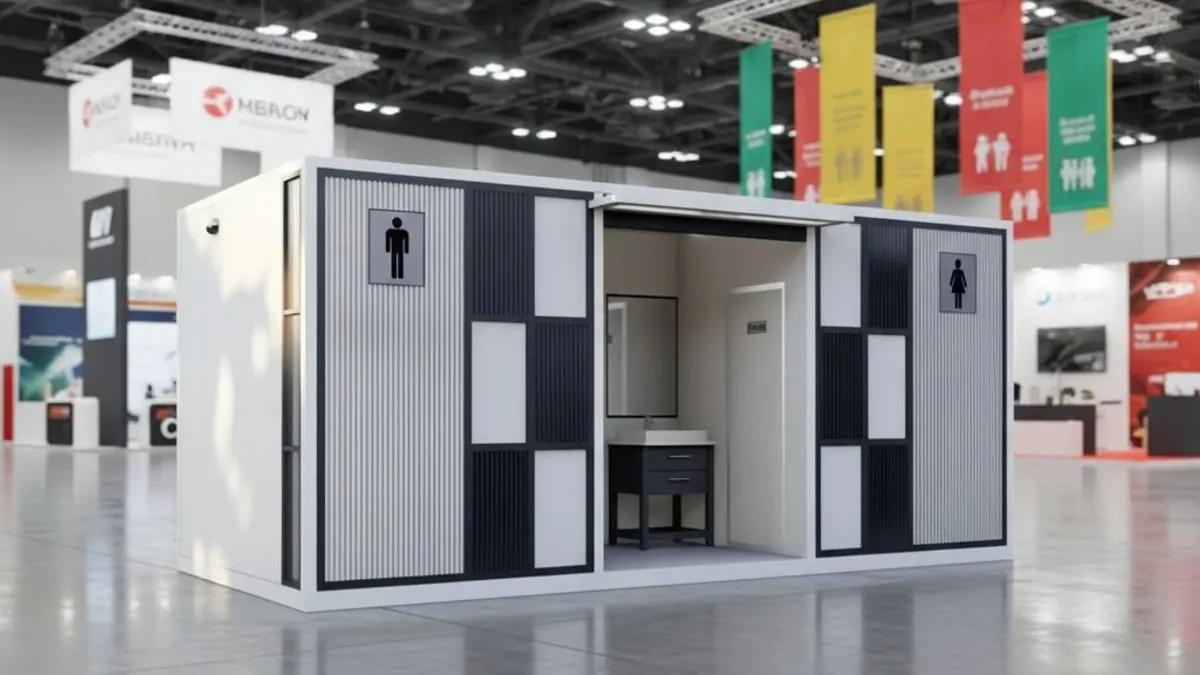
An event weekend, a six-month construction phase, and a multi-year workforce camp need different sanitation logic. Mobile units can help early phases, overflow, remote work fronts, and temporary events, but the plan should identify when a more fixed block becomes necessary.
A better capacity brief
Before counting units, define user groups, peak windows, service intervals, water and wastewater routes, cleaning access, shade, privacy, and what happens if attendance or workforce count rises. That brief is more useful than a simple unit list.
Cleaning frequency is capacity
A unit that is not cleaned often enough loses capacity even if it is physically present. Users avoid it, queues shift elsewhere, and the site begins to feel unmanaged. Cleaning intervals, refill access, and waste removal should be part of the capacity calculation.
In hot climates, this matters even more because odor, water use, and user tolerance change quickly.
The sanitation plan should be visible to operations teams
A good plan can be handed to the people who run the site. It shows who uses each cluster, when cleaning happens, where water comes from, where wastewater goes, and how overflow is handled. If the plan only exists as a supplier quote, operations will have to invent the real system later.
Staff routes are part of public health
Sanitation planning is often drawn around guest or worker queues, but the cleaning team needs its own route. If cleaners must cross the longest public path, wait for vehicles, or carry supplies through guest-facing areas, service frequency will fall exactly when the site needs it most.
A stronger layout gives cleaning vehicles, refill teams, and wastewater service crews a predictable path that does not embarrass users or interrupt the event. That route is part of capacity because it decides how quickly the system can recover after a peak.
Do not let temporary mean invisible
Temporary sanitation still needs signs, lighting, privacy, accessible paths, and a visible responsibility owner. Users should know where to go before they are desperate, and operations teams should know who checks each cluster.
When sanitation feels improvised, people remember the discomfort more than they remember the event or the worksite. The goal is not to make the units prominent; it is to make the system obvious enough that no one has to hunt for it.