Overflow demand is not the same as easy demand
When national parks, scenic corridors, and gateway towns see heavy travel, nearby private campgrounds often receive the second wave of demand. Guests look for availability, a shorter drive, simpler booking, pet options, or a quieter alternative to crowded public campgrounds. That attention can be useful, but it can also tempt owners to add units faster than the property can absorb them.
Overflow demand is valuable only when the stay still feels intentional. A cabin row squeezed into leftover land may fill for a season, then create noise, bathroom pressure, parking conflict, and review problems. The better question is how to turn regional travel pressure into a durable cabin zone.
Gateway guests arrive with compressed patience
Many gateway travelers have already driven far, dealt with timed-entry rules, watched weather, and changed plans. By the time they reach a private campground, patience may be low. If the cabin zone is hard to find, parking is ambiguous, or staff instructions are long, the arrival experience can sour quickly.
That makes the first five minutes unusually important. Operators should plan clear signs, after-hours access, visible unit numbers, short walking paths, and communication that assumes the guest may be tired, offline, or arriving after dark.
Cabin density must respect outdoor expectations
A guest who books near a park usually expects some degree of space, quiet, sky, trees, or view. Higher density may improve revenue per acre on paper, but it can weaken the reason the guest came. Cabin zones need more than code-minimum spacing; they need a sense of breathing room.
This does not always mean large lots. It can mean staggered doors, angled decks, planted buffers, controlled lighting, shared gathering areas placed away from sleeping edges, and service paths that do not turn every porch into a corridor.
Utilities decide whether the zone can scale
Overflow-driven cabin additions often begin with a small phase. The danger is that phase one uses the easiest utility path and blocks the better long-term route. Water, wastewater, electrical capacity, Wi-Fi coverage, fire access, and maintenance circulation should be mapped before the first cabins are ordered.
If the first phase is experimental, it should still protect future decisions. Leave room for metering, define trench routes, separate guest and staff movement, and avoid placing cabins where later upgrades would require expensive disruption.
Not every visitor wants the same distance from the park
Some guests want the closest possible basecamp. Others prefer a quieter stay thirty or forty minutes away if the cabin is comfortable and the property feels less crowded. This creates room for different cabin messages: park access, quiet recovery, family basecamp, remote-work shoulder stay, or scenic road-trip stop.
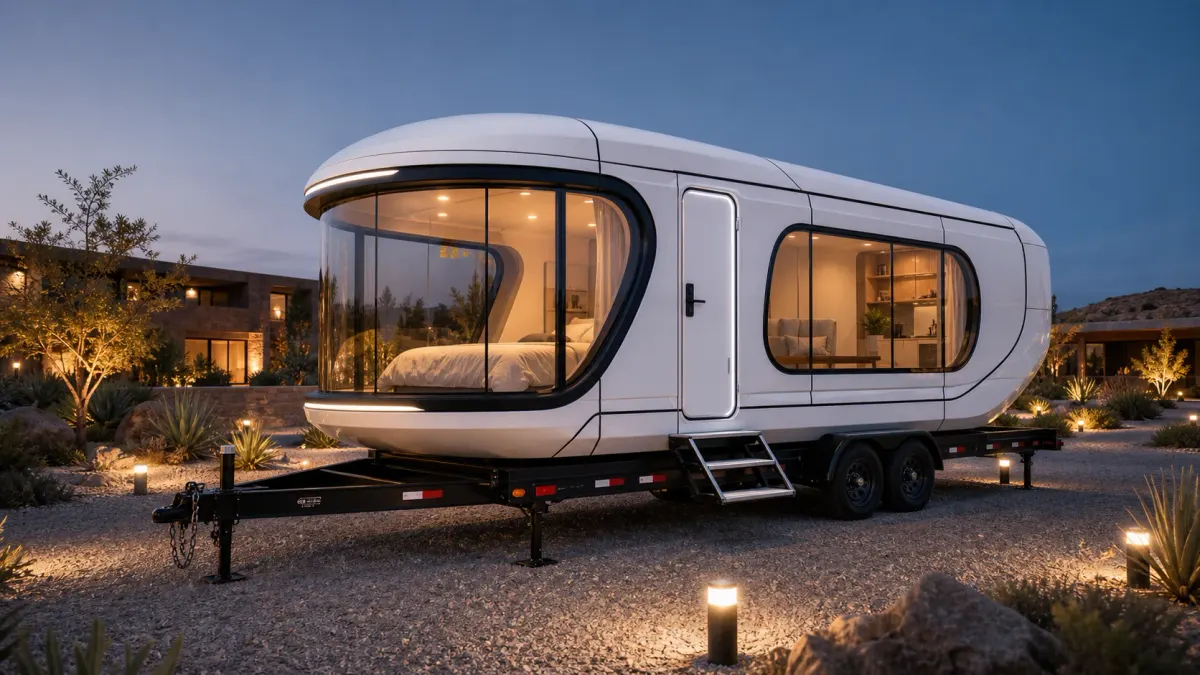
The product mix should reflect those segments. A small sleeping cabin, a panoramic glamping unit, a family module, and a support-focused staff unit solve different problems. Treating all cabins as the same unit can flatten the offer and confuse pricing.
The operator should design for uneven peaks
Gateway demand can surge around weekends, school breaks, weather windows, road openings, and event calendars. A cabin zone must handle peaks without assuming every day will behave like peak season. Housekeeping, laundry, trash, check-in support, and parking overflow need their own capacity plan.
A practical approach is to phase cabins in groups that staff can clean, maintain, and monitor. The constraint may not be land; it may be linen storage, hot-water recovery, staff travel time, or the number of late arrivals the team can support without mistakes.
Durable overflow planning protects the brand
The strongest private campground strategy is not to look like a fallback. It is to become the place guests are glad they found when the main park was full, expensive, or complicated. That requires a cabin zone with a clear identity and realistic service promise.
Owners should define the offer before adding units: who the guest is, why the property is a good base, what the cabin includes, where shared services sit, and how the site will avoid feeling overcrowded when the regional travel wave arrives.