Start with the guest promise
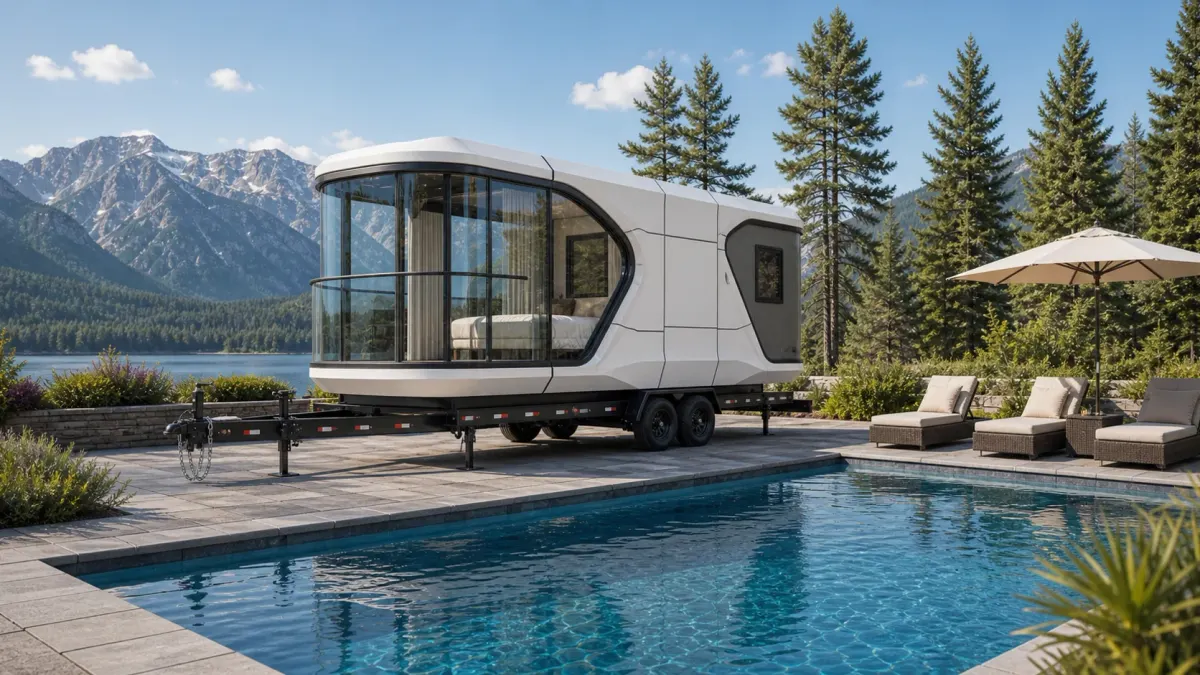
North American camping and outdoor hospitality demand keeps rewarding operators who can deliver comfort without losing the outdoor setting. That is why a glamping cabin site should be planned around the guest promise, not around the unit count alone.
Before selecting models, decide what the stay should feel like:
- Quiet and private retreat.
- Family-friendly cabin cluster.
- Premium resort-style suite with outdoor deck and views.
- Simple but well-finished cabin for seasonal campground use.
This decision affects spacing, deck design, utility routing, housekeeping movement, and the type of module you should deploy. Teams comparing room formats can also review the North America Series to understand how MK frames trailer-ready hospitality modules for this market.
Plan the utility loop before the décor package
A common early mistake is to approve a beautiful cabin layout before the operator has mapped the utility loop and service rhythm.
For outdoor hospitality, the real operational questions are:
- Where does power enter the site, and how far is each cabin from the service point?
- Is water pressure stable at every cabin location?
- How will wastewater, greywater, or septic loads be handled during full occupancy?
- Where does hot water recovery happen during back-to-back check-ins?
- How quickly can your maintenance team reach shutoff points after hours?
If those answers are weak, the site may still open, but the operating strain shows up fast in maintenance calls and guest reviews.
Protect access, servicing, and future replacements
The cabin is not the only object that needs to move on site. Delivery vehicles, cranes, housekeeping carts, service teams, propane refills if used, and waste management all need a clean operating path.
When reviewing a glamping site plan, think about three access layers:
Delivery access
Can a truck, trailer, or crane reach the installation zone without damaging finished guest areas? This matters even more if you plan to add cabins later.
Daily operations
Can housekeeping move efficiently between units? Is there a clear path for linen, waste, maintenance tools, and guest luggage?
Replacement and repair access
If one unit needs major service later, can you isolate and reach it without disrupting the whole site?
These questions are not glamorous, but they often separate a beautiful launch from a durable operating model.
Guest comfort is more than the interior
Operators usually win repeat bookings when they combine a strong cabin with a site that feels intentional.
That means reviewing:
- Sight lines between neighboring cabins.
- Deck privacy and outdoor seating orientation.
- Shade, wind, and weather exposure.
- Noise separation from roads, generators, and service areas.
- Night lighting that feels welcoming without destroying the dark-sky atmosphere.
In other words, the cabin should feel like part of a designed hospitality experience, not like a product dropped onto a parcel.
Build in phases, not all at once
A modular site becomes easier to finance and refine when it grows in phases.
A phased rollout usually gives operators three advantages:
- You validate which room type and pricing tier gets traction first.
- You learn where housekeeping, utilities, and guest arrival patterns need adjustment.
- You can reserve the strongest view lots for a later premium phase rather than spending them too early.
This is where modular cabins can be especially useful. Once the operating logic is clear, the site can add more units without reinventing every detail. If the land itself is still under review, pair this with the raw-land prefab cabin checklist before finalizing the first cluster.
What to ask a cabin supplier during planning
When evaluating a modular supplier for a North American glamping site, ask for information that helps your operator and installer work together:
- Cabin dimensions and finished weight guidance.
- Utility connection locations.
- Recommended climate package for your region.
- Exterior material assumptions and maintenance expectations.
- Deck or entry threshold coordination points.
- Loading and unloading logic for delivery day.
The more a supplier helps you think through real deployment questions, the easier it becomes to turn a good-looking concept into a reliable guest product. Buyers who are still comparing product paths can also cross-check the trailer-ready module comparison guide before approving a model.
The right goal for a first-phase site
The strongest first phase is not always the largest one. It is the one that proves your operations can deliver the room standard you are promising.
That is why many successful outdoor hospitality projects prioritize:
- A repeatable room type.
- Clear service access.
- Reliable utility performance.
- A memorable outdoor setting.
- A path to add units without reworking the whole property.
For North American operators, that approach is usually more durable than treating the cabin purchase as the entire strategy.
Glamping succeeds when comfort feels inevitable
A glamping cabin site should not make guests notice every operational decision. The best layouts make parking, paths, privacy, utilities, trash, cleaning, and views feel naturally resolved.
That is why planning matters before unit selection. A beautiful cabin placed into a weak site plan becomes a photo opportunity with service problems. A careful site can make even a modest cabin feel memorable.