Treat sanitation as a daily-use system, not a leftover support item
In remote Saudi camps, modular sanitation is often discussed too late. Teams focus first on beds, offices, and dining because those items feel more visible in procurement. But in real camp life, wash support becomes critical almost immediately.
Sanitation affects:
- Resident dignity and comfort.
- Shift-change bottlenecks.
- Cleaning labor intensity.
- Water use and refill rhythm.
- Camp reputation with supervisors, crews, and visitors.
That is why wash blocks should be planned as part of the daily operating system, not as a late support add-on. This sits directly beside the broader logic in our Saudi workforce camp planning article.
User groups and shift peaks should shape the layout
A wash block sized only by overall headcount can still perform badly.
Buyers should ask:
- Who uses the block and at what times?
- Are the peak windows tied to one shift or several overlapping groups?
- How far do people walk in heat before reaching wash support?
- Do supervisors, visitors, or prayer-support areas need a different privacy pattern?
These questions often change the layout more than the nominal capacity does. A camp with the right number of fixtures can still feel overloaded if the timing and adjacency are wrong.
Water, wastewater, shade, and drainage must be planned together
In Saudi conditions, wash support cannot be separated from utility and climate logic.
The core planning questions usually include:
- How stable is the water source and refill pattern?
- What wastewater method is assumed in the current phase?
- How will drainage behave during cleaning cycles and heavy use?
- What shade or covered transition space protects users before and after entry?
- Where should service connections sit to avoid disrupting resident routes?
A modular sanitation block may look self-contained, but its success depends on the surrounding system. This is also why prayer-support planning often overlaps with wash planning. Buyers working on that adjacency can compare the issue in our Musalla and Wudu guide.
Cleaning and refill routes need as much logic as the user path
Many camp buyers plan the resident path and forget the service path.
But sanitation support works best when the operator can answer:
- How do cleaning teams enter and reset the block efficiently?
- Where are consumables, water top-up, and waste-service points stored or staged?
- How visible is the service route during occupied hours?
- What happens if one block needs urgent maintenance while the camp is busy?
A good sanitation plan protects both the user experience and the cleaning routine. Without that service logic, the block may be technically adequate and still fail in daily use.
Decide what should arrive in phase one and what can wait
Not every project needs the final sanitation layout on day one.
Some remote camps benefit from a phased sanitation approach:
- Early mobile support for first crews and site office teams.
- Additional wash capacity as resident numbers stabilize.
- Better separation between user groups as the camp matures.
- Longer-term blocks once utility confidence and traffic patterns are clearer.
That phased decision should be made intentionally. Otherwise the project may overbuild too early or under-support the first operating phase. Buyers already planning early support logic can connect this with our article on mobile support units before full camp build-out.
What to put in the sanitation support brief
Before discussing product combinations, buyers should prepare a compact sanitation brief that includes:
- Current and expected user count.
- Shift timing and peak wash periods.
- Water supply and refill assumptions.
- Wastewater and drainage constraints.
- Climate exposure, shade needs, and walking distances.
- Cleaning frequency and service staffing assumptions.
- Whether the units are temporary, relocatable, or intended for a longer camp phase.
That allows the supplier conversation to move from generic product selling into practical deployment planning.
Wash blocks are dignity infrastructure
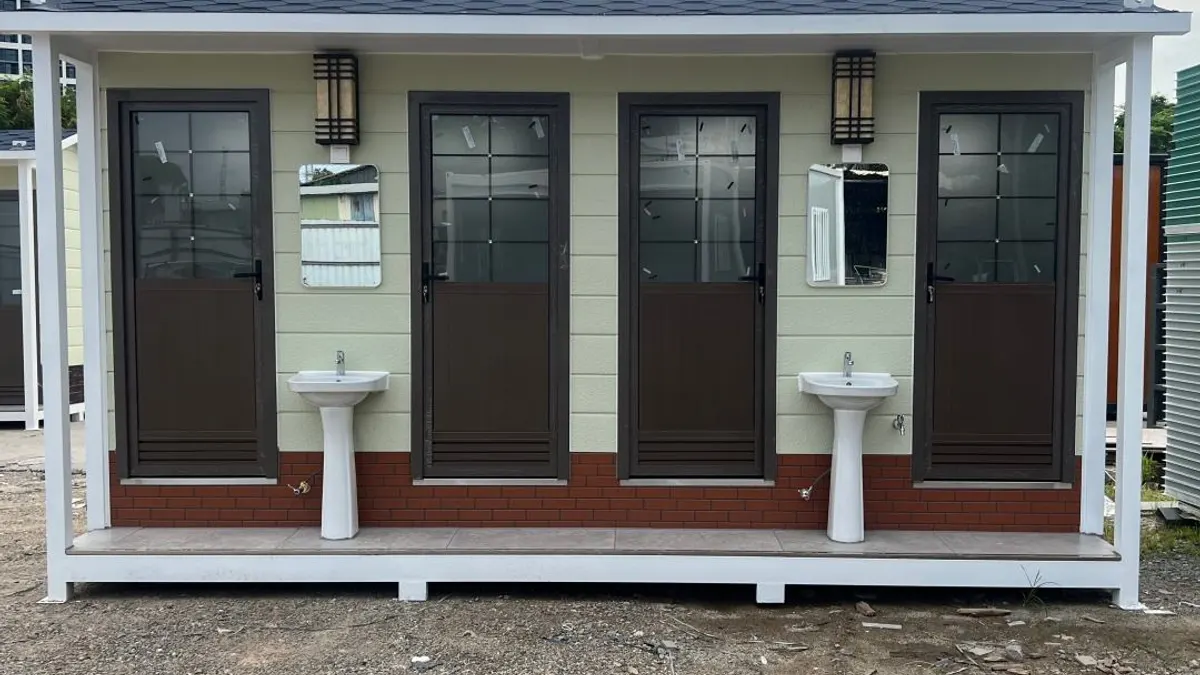
Sanitation and wash blocks are often treated as technical support, but in remote camps they become dignity infrastructure. They influence hygiene, morale, health, and the perceived seriousness of the whole site.
A good plan makes water, wastewater, cleaning, privacy, lighting, and peak-time access visible in the layout before units are ordered.